


ただいま建築中・完成見学会
- ただいま建築中・完成見学会
【まったく新しい令和の家づくり帳②】「伝統構法×先端(正反合)」国産天然乾燥材を手刻み木組みで極める
レリーフでは今回、計画段階の2023年~入居後の2025年にかけて実際に建築した住宅を当ブログでご紹介させていただく運びとなりました。
なお、この住宅はレリーフでの審査を通過した場合に、いつでも見学が可能です。詳しくはページ下部見学方法をご確認下さい。
At Releaf, we are pleased to share on this blog the home we designed and built, covering the period from the planning stage in 2023 through post‑move‑in in 2025.
This home is available for viewing at any time once it passes Relief’s screening process. For details, please refer to the viewing information at the bottom of this page.
手刻み・木組みの家づくり。すべては永続的な資産価値の基となる高耐久の構造のために
家の設計段階が完了すると、基礎工事が始まる前に、まずは構造材の手刻みから着工します。
今回のプロジェクトでは、構造材の100%に、静岡県天竜産の樹齢約80年の天然乾燥させた檜と杉を使用しています。集成材やプレカット(工場加工)材は一切使用していません。
この天然乾燥材について特筆すべきは、その価格の驚異的な安定性です。
ウッドショック以降も不安定な値上がりが見られる輸入材とは対照的に、国産の天然乾燥材の価格はウッドショック後に下落し、それ以来安定を保っています。その結果、プレカット材と国産天然乾燥材の価格差は大幅に縮まりました。
エネルギー危機の影響でナフサなどの石油由来の資材が高騰する一方で、国産材の価格は低水準で安定しています。「輸入材の方が国産材よりも安い」という数十年来の常識が逆転しかねないほど、大きな構造的変化が起きているのです。
戦後の植林活動から約80年が経過し、当時植えられた木々は今、まさに使い時となる理想的な樹齢に達しています。
このような状況下で、かつては安価だったものの現在は高価になった輸入プレカット材を使い続ける唯一の理由は、「手間がかからない」という点に集約されます。人工的に乾燥させ、工場でカットされているため、組み立てるだけで済み、カンナや鑿(のみ)といった伝統的な道具を必要としません。また、木が実質的に「死んでいる」状態のため、油分を含み生命力が残っている天然乾燥材とは異なり、施工後にねじれや狂いが生じにくいという利点もあります。
しかし、そこには決定的な欠点があります。それは「耐久性」です。
最も重要である長期耐久性が天然乾燥材とは雲泥の差があるのです。
Once the design phase of the house is finalized, construction begins with the hand-cutting of the structural timber before the foundation is poured. For this project, 100% of the structural members are made from naturally air‑dried Japanese cypress (hinoki) and cedar from Tenryu in Shizuoka, each approximately 80 years old. No laminated lumber or pre‑cut (factory‑processed) materials are used.
What is particularly noteworthy about this naturally dried structural timber is its remarkably stable price.
In contrast to imported pre‑cut lumber—which has continued to rise in price even after the “wood shock”—the price of domestically produced, naturally air‑dried timber has actually declined since the wood shock and has remained stable ever since. As a result, the price gap between pre‑cut lumber and natural domestic timber has narrowed significantly. While petroleum‑derived materials such as naphtha have surged due to the recent energy crisis, domestic timber prices have stayed low and stable. We are now seeing a structural shift so significant that the decades‑long assumption that imported lumber is cheaper than domestic lumber may soon be reversed.
It has been roughly 80 years since Japan’s post‑war reforestation efforts began, and the trees planted at that time have now reached their ideal age for use.
In this context, the only real reason to continue using imported pre‑cut lumber—which was originally inexpensive but has recently become costly—is that it requires less labor: it is artificially dried, factory‑cut, and ready to assemble. Traditional tools such as hand planes or chisels are unnecessary, making construction easier. And because the wood is essentially “dead,” it does not twist or move after installation, unlike naturally dried timber that still contains oils and life.
However, there is one critical drawback: durability. When it comes to long‑term durability—the most important factor—the difference between pre‑cut lumber and naturally air‑dried timber is overwhelming.
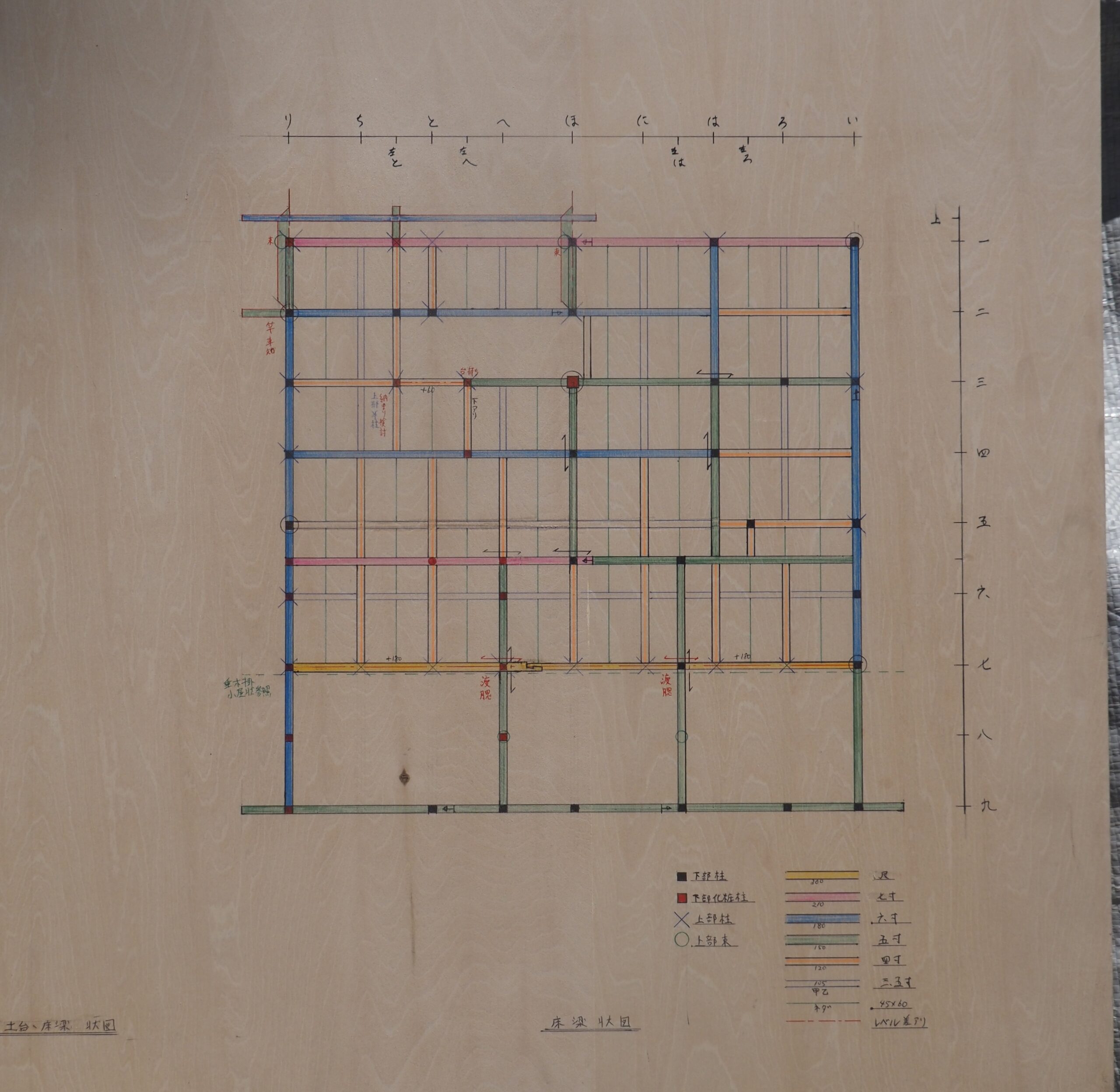
伏図といわれる大工が書いた設計図。手刻みの現場で板に手書きする。設計士とは別に高度な設計技術も持つ宮大工ならではの自作の設計図を用いて適材適所で材を構築する。現代的な設計図とは違った内容に注目
多岐にわたる伝統技法と、金物に頼らない構造体。これらが融合することで生み出される長期耐久性
この住宅の施工には、手刻みの天然乾燥材を用い、金物を最小限に抑えた伝統的な継手・仕口による構造で施工しています。
例えば、この建築を象徴する技法の一つに、数百年もの歳月に耐える寺社仏閣などの木造建築によく見られる「渡り腮構法」という工法があります。
これは、1階から2階の天井まで通し柱を一本立てるのではなく、構造的に負荷がかかりやすい1階の柱と2階の梁の接合部を金物なしで精密に組み込む手法です。
また、梁の部分は、継手の中でも最も高い引張強度を誇ることで知られる「金輪継ぎ(かなわつぎ)」が施されているのを見ることができます。
さらに、構造材はその上質な材質だけでなく、サイズも一般的ではありません。標準的な3.5寸(10.5cm)角の柱ではなく、4寸(12cm)角の太い柱を使用しています。
細い柱と太い柱はどちらが長持ちするかは言うまでもありません。
ほかにも、ほぞ差し、貫(ぬき)、込栓(こみせん)、そして大黒柱に施された四方差しの長ほぞと金輪栓(かなわせん)……。
こうした伝統的な仕口や継手の数々は、完成後も真壁づくりや現しの構造材として目に見える形で残り、建築のデザインそのものとしても表現されます。
耐久性の高い天然乾燥材を、あえて金物を使わずに組み上げるこの構法は、「素材に耐久性があるからこそ、金物に頼る必要がない」という考えに基づいています。
金物を避けるのには明確な理由があります。
-
錆(さび)の問題: 錆は木造構造に緩みや歪みを生じさせ、構造の健全性に悪影響を及ぼします。
-
木材の収縮への対応: 天然乾燥材には豊富な天然の油分が含まれています。この油分が時間をかけて抜けていくことで、木はより硬く、強くなっていきます。もし金物を使用していると、木が収縮した際に金物との間に隙間が生じ、構造の劣化を早めてしまいます。
対照的に、すべてを木で組み上げた構造では、すべての部材が共に収縮するため、年月が経つほどに接合部が締まり、強度はむしろ増していきます。
このように、現代の構造計算には現れない側面こそが、長期的な性能に寄与しています。手仕事による天然乾燥材と伝統構法で組み上げられた骨組みは、歴史が証明してきた高い耐久性を備え、歳月を重ねるごとにその真価を増していくのです。
The design and construction of this house employ a structural system based on hand‑cut, naturally air‑dried timber, assembled using traditional joinery with minimal metal fasteners. For example, one symbolic traditional technique used here is the “watari‑ago” method, commonly found in wooden temple and shrine architecture that lasts for several centuries. Instead of using a single continuous column from the first floor to the second‑floor ceiling, this method is applied precisely at the structurally vulnerable point where the first‑floor column supports the second‑floor joists. In the beams, you can also see kanawa‑tsugi, a type of scarf joint known for providing the highest tensile strength.
Furthermore, the structural members differ not only in material but also in size: instead of the standard 3.5‑sun (10.5 cm) posts, we use 4‑sun (12 cm) thick columns. Traditional joinery such as mortise‑and‑tenon, nuki bracing, wooden locking pegs (komisen), and a four‑way long‑tenon with kanawa‑sen for the main column (daikokubashira) are all visible even after completion, becoming part of the architectural expression.
Using these methods, the highly durable naturally air‑dried timber is assembled with a construction system that requires no metal hardware, precisely because its durability makes such hardware unnecessary.
There are clear reasons for avoiding metal fasteners. First, rust: rust causes looseness and distortion in the wooden structure, negatively affecting structural integrity. Second, naturally air‑dried timber contains abundant natural oils. As these oils gradually dissipate over time, the wood becomes harder and stronger. If metal fasteners are used, gaps form between the shrinking wood and the hardware, accelerating structural deterioration. In contrast, when the structure is assembled entirely with wood, all components shrink together, tightening the joints and increasing strength over time.
In this way, even aspects not reflected in modern structural calculations contribute to long‑term performance. By constructing the frame with hand‑crafted, naturally air‑dried timber using traditional joinery, the building gains a level of durability that has been proven throughout history—one that continues to improve as the years pass.
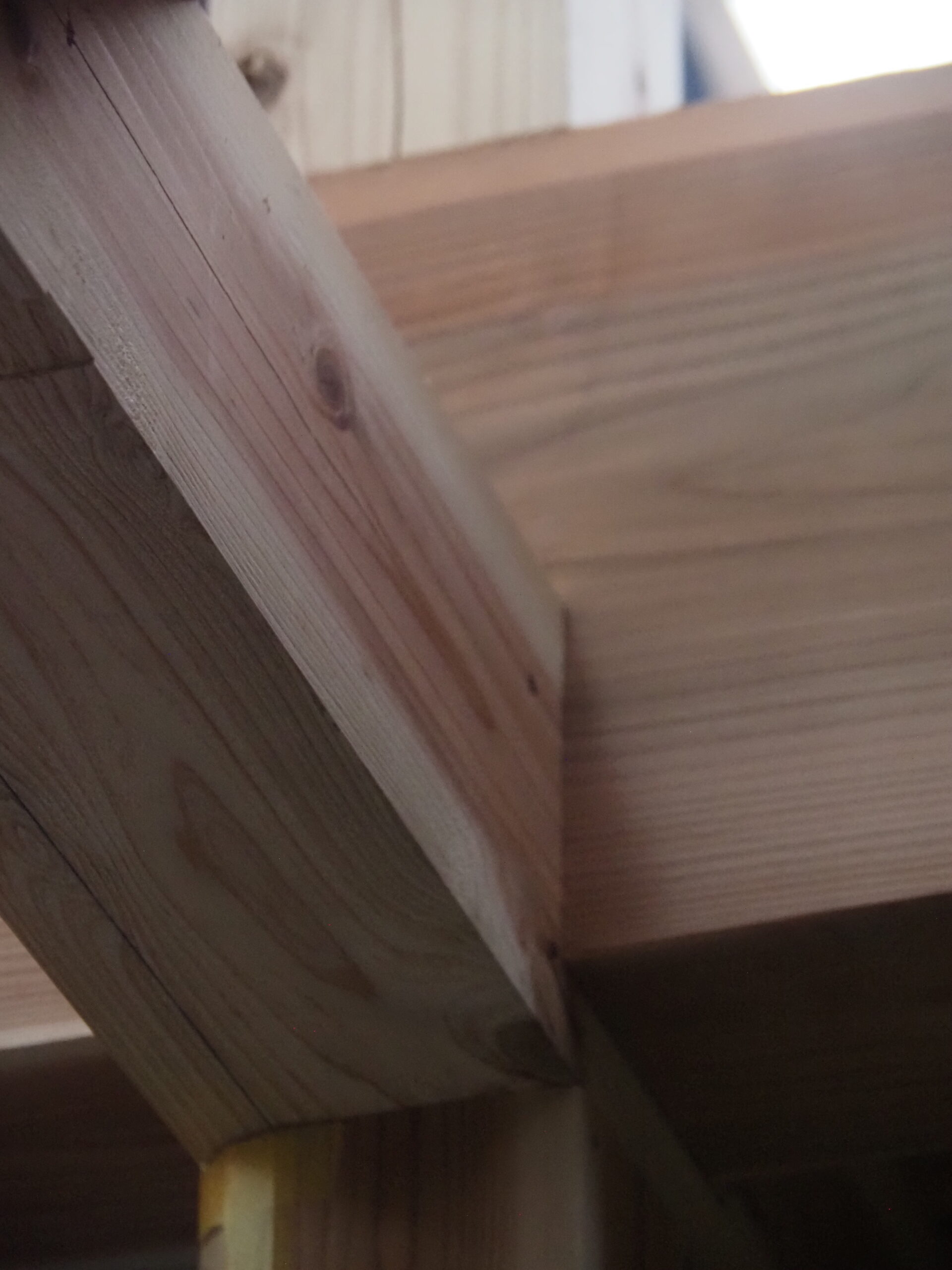
渡り腮構法。柱が2階まで伸びていない耐力的に不安定な部分にこの渡り腮を梁で用いて耐力を一気に向上させます。長期天然乾燥の天竜産杉の梁と梁が金物や貫通した穴なしに架けるように交差します
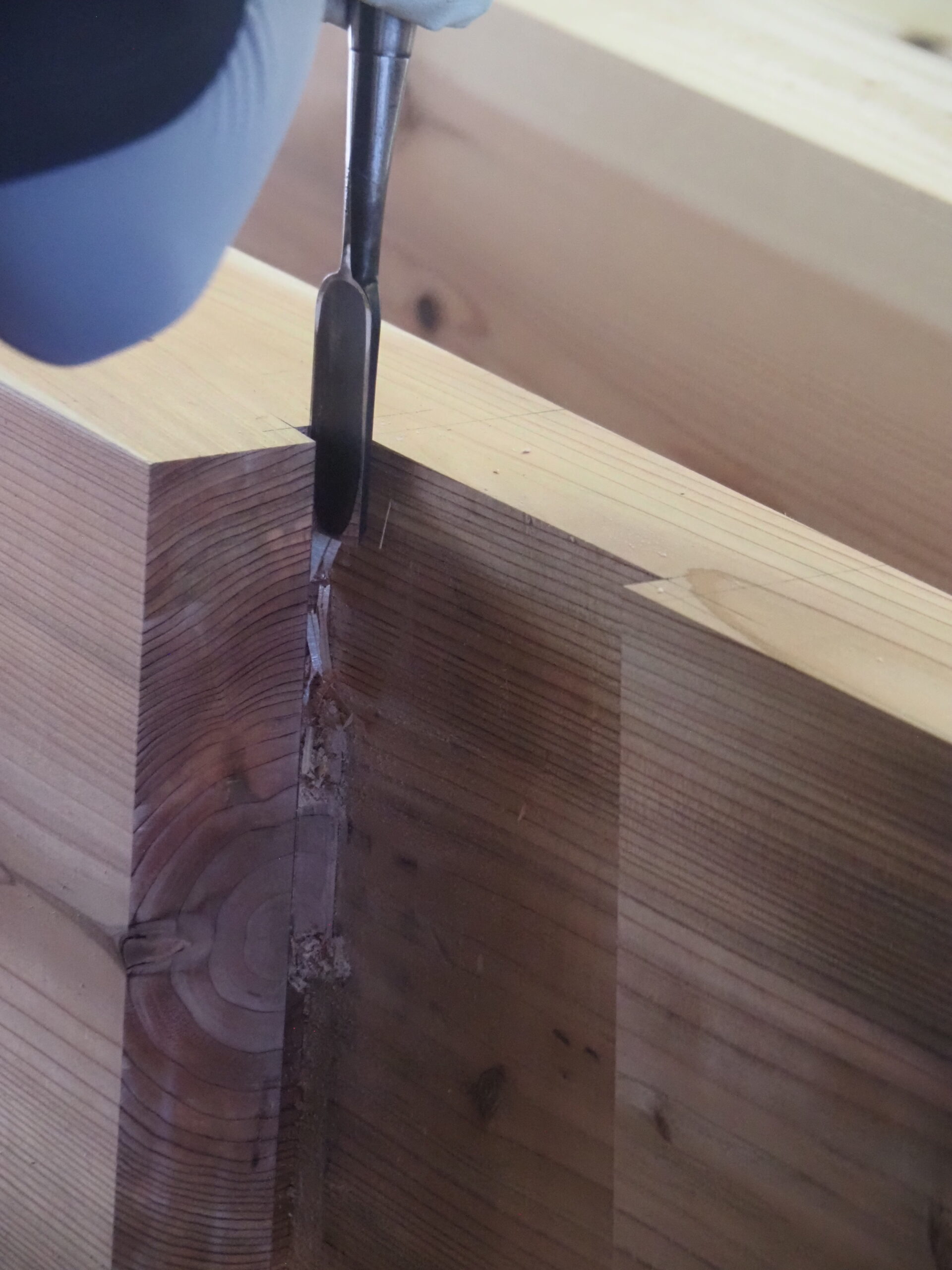
金輪継ぎを刻む。これは梁と梁2つを1つに継いで非常に長い1つの梁にする刻みで、複雑な継手なうえにさらに込栓も打ち込むため極めて強力な引っ張り耐力を有する、典型的な刻みの一種です
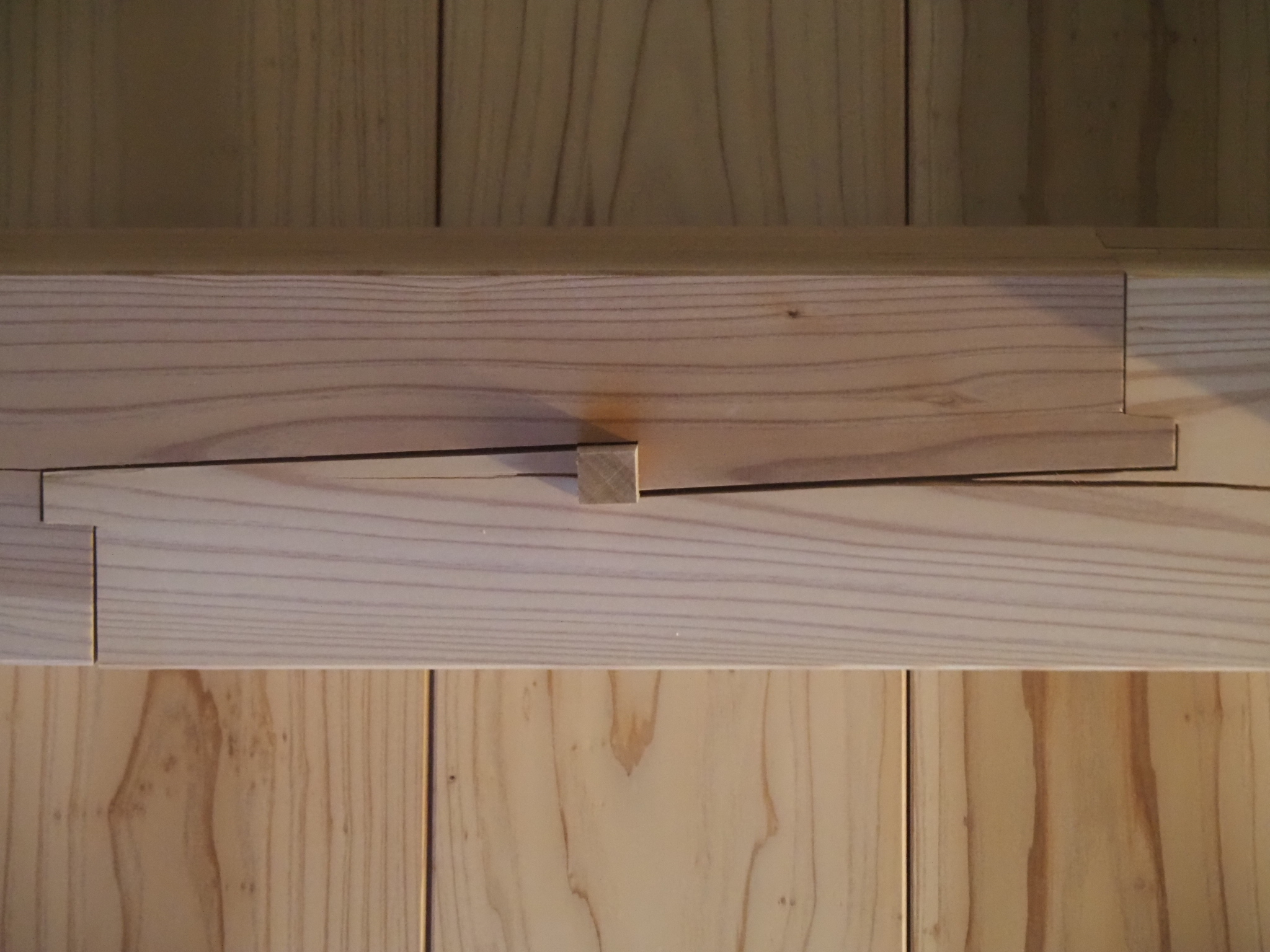
完成後の金輪継ぎ。割れが見られるのは背割りをしていない天然乾燥材ならではで、この割れこそが水分が飛び強度増がしている証拠
設計自由度の高い伝統構法ならではの本格数寄屋風和室と、北欧デザインの共存
このプロジェクトにおいて、施主様からは「1階の居住スペースを構造の伝統構法と調和させたい」との要望がありました。その結果、1階の居室内は数寄屋建築の様式で整えられています。
間仕切り壁には300年以上の耐久性を誇る竹小舞土壁を採用し、柱を見せる真壁造り、5度塗りかつ壁面によって色味の調合を変えた漆喰左官仕上げ、檜の躙口(にじりぐち)、風合いのある銘木錆び丸太、 天井は、竿縁、掛込、編代天井という3つの伝統的な天井の様式が一部屋で構成されており、建築的な見どころが凝縮されています。
これらはすべて施主様の強いこだわりを反映したものであり、将来の転売を意識した「ありきたりな設計」などは微塵も考慮されていません。しかし、この数寄屋建築風の部屋が希少価値を生み、最終的にはこの住宅の唯一無二の魅力を高めているのです。
「正・反・合」を体現する対比
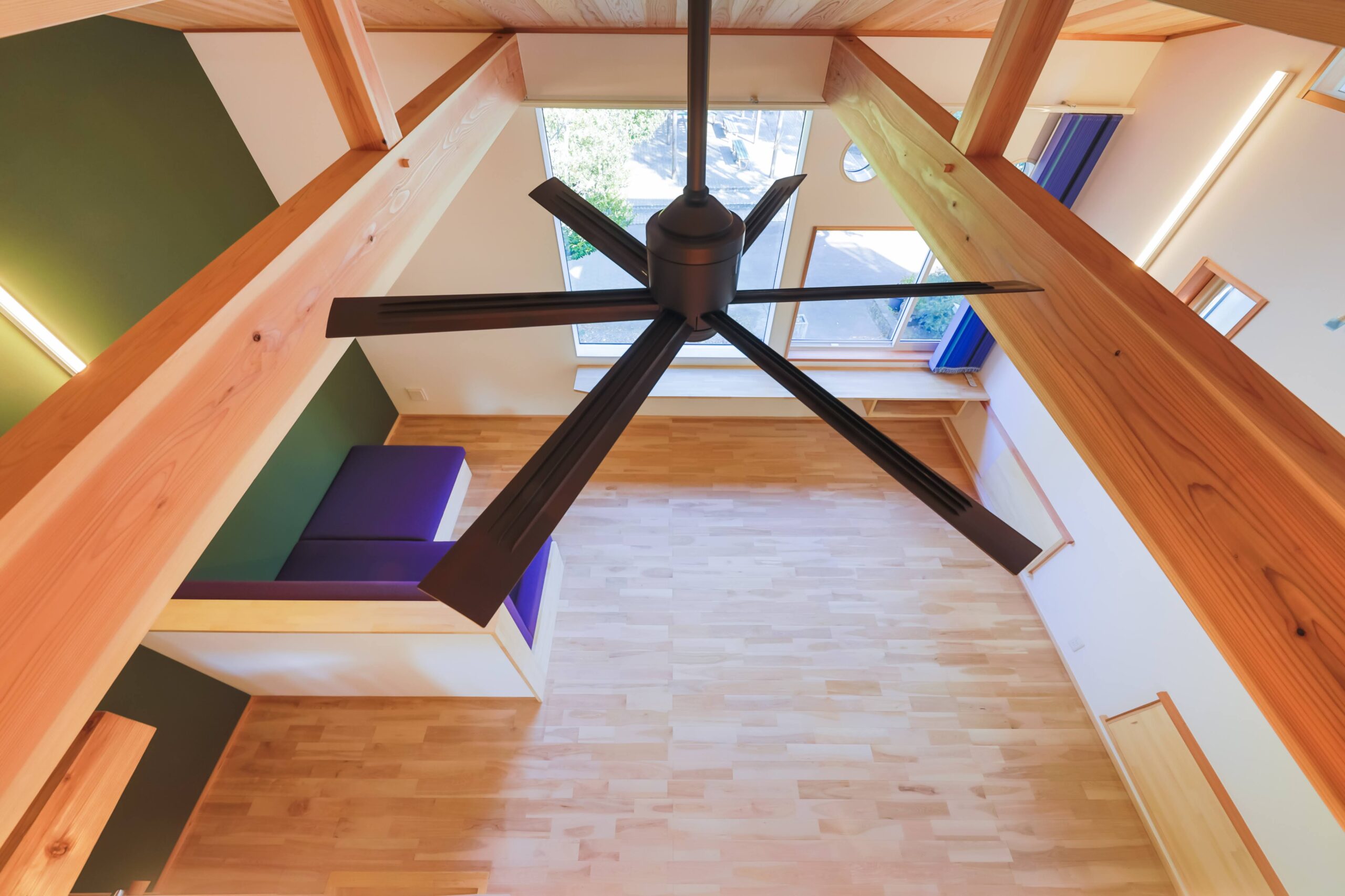
対照的に、2階は北欧の建築家から着想を得た要素を数多く取り入れた、22畳ワンルームの開放的な空間となっています。 フロアのあちこちには、フィンランドのキャラクターであるムーミンが隠れており、訪れる人がそれらを見つけて楽しめるような遊び心あふれる環境が整えられています。
1階と2階のこの意図的なコントラストは、この家の名称である「正反合(せいはんごう)」というコンセプトを体現しており、計算されたアシンメトリー(非対称性)を表現しています。
伝統構法と、長期優良住宅(高断熱性能や耐震等級3の構造計算)という現代の性能基準との対比。そして、1階と2階で全く異なる建築様式と内装。
1階と2階での居室の趣の対比もまた(正反合)となっているのです。
In this project, the client expressed a clear desire to have the first‑floor living space harmonize with the traditional construction methods used in the structure. As a result, the first‑floor room is designed in the style of sukiya architecture.
The walls feature bamboo‑lath earthen plaster (takekomai tsuchikabe), renowned for its durability of more than 300 years. The room is built in shinkabe style with exposed posts, finished with five layers of lime plaster, each tinted slightly differently depending on the wall surface. A hinoki nijiriguchi, beautifully aged rust‑finished logs, and a ceiling composed of three traditional styles—saobuchi, kakekomi, and ajiro—all come together to create a space rich in architectural highlights.
Every element reflects the client’s strong personal commitment; there was never any intention to design something generic or resale‑oriented. Yet this very dedication results in rarity and aesthetic value, ultimately enhancing the home’s unique character.
In contrast, the second floor is a spacious 22‑tatami open room inspired by Scandinavian architects. Throughout the space, small Moomin characters from Finland are hidden playfully, inviting visitors to enjoy discovering them. This intentional contrast between the first and second floors embodies the concept behind the home’s name, “Sei‑Han‑Gō” (Thesis–Antithesis–Synthesis), expressing a carefully crafted asymmetry.
Beyond the contrast between traditional construction and the modern performance standards of a Long‑Life Quality Housing specification—such as high‑grade insulation and seismic grade 3 structural calculations—the stark difference in architectural style and interior atmosphere between the first and second floors forms yet another layer of Sei‑Han‑Gō.
※当建築では、日本の伝統構法と長期優良住宅などの現代規格を組み合わせた建築手法を多くの方に知っていただきたく、施主の許可がある場合に限り、国籍を問わず個人・法人の皆さまの見学や取材を受け付けております。
プライバシー保護のため、レリーフによる事前審査や、指定の本人(法人)確認書類のご提出、情報の二次利用や SNS への投稿を控えていただく旨を含む同意書へのご署名をお願いしております。また、審査の結果、見学・取材をお断りする場合がございますが、その際の審査内容や理由についてはお伝えできませんので、あらかじめご了承ください。
詳しい内容につきましては、お問い合わせフォームや質問用 LINE から、どうぞお気軽にご連絡ください。
(We welcome visits and interviews from individuals and organizations of any nationality, provided that the homeowner grants permission. Our aim is to share the construction approach that combines traditional Japanese building techniques with modern standards such as the Long‑Life Quality Housing certification.
For privacy protection, we ask that you complete a preliminary screening conducted by Releaf, submit the required personal (or corporate) identification documents, and sign a consent form that includes agreeing to refrain from secondary use of information and posting on social media. Please note that, depending on the results of the screening, we may decline requests for tours or interviews. In such cases, we are unable to disclose the details or reasons for the decision.
For more information, feel free to contact us through the inquiry form or our dedicated LINE account for questions.)
※ご質問やお問い合わせはホームページ上部の「無料相談予約」のLINEから「まったく新しい令和の家づくり帳の問い合わせ」と記載してご連絡いただくかメールフォームからお願いいたします。なお、内容によりご返答できない場合がございます旨ご了承ください。
(For questions or inquiries, please contact us via LINE from the “Free Consultation Reservation” link at the top of our website, and include the message “Inquiry about the Completely New Reiwa Homebuilding Guide.” Alternatively, you may use the contact form. Please note that we may not be able to respond depending on the nature of your inquiry.)
※当建築の提携工務店は工務店一覧に未記載の工務店です
(Please note that the construction company partnered with this building project is not listed in the official directory of contractors.)
※レリーフで記載の写真や文章はプライバシーにかかわる部分の削除など以外、すべてAIなどの自動生成技術を用いておりません。だだし、英訳は翻訳サイトにて翻訳しております
(The photos and texts shown in the our homepage were not created using AI or any other automatic generation technologies; however, the English translation was done using an online translation service.)
※当サイトのコンテンツについては、可能な限り正確な情報を掲載するよう努めておりますが、情報の正確性や安全性を保証するものではありません。 掲載内容によって生じた損害や損失等について、当サイトは一切の責任を負いかねますので、あらかじめご了承ください。 また、当サイトからリンクやバナーなどによって他のサイトに移動された場合、移動先サイトで提供される情報、サービス等について一切の責任を負いません。
(While we strive to provide the most accurate information possible, we do not guarantee the accuracy or safety of the content on this website.Please be advised that we shall not be held liable for any damages or losses incurred as a result of the information provided on this site.Furthermore, if you navigate to other websites via links or banners from this site, we take no responsibility for the information, services, or any other content provided on those external sites.)
こんな記事も読まれています
 2016年6月15日 【ちょっとひといき】ReLeaf Coffeeを淹れるまで Vol.3
 2020年5月3日 【第三者機関による気密測定検査を実施しました】「“超”高性能で老若男女でくつろぎ遊べる、木造三階建ての家」ができるまで④
 2016年8月24日 横浜に新たなスマートシティが2018年に誕生、街全体で電力を融通
 2017年5月12日 【葉山ワインバルPJ】地下ワインセラー室の工事が始まっています
 2017年10月14日 今ある設計案や見積りに少しでもご不安があったなら、、、設計見積り診断をご活用ください

- お知らせ (49)
- 建築家 (20)
- 早川建築計画 (4)
- STUDIO8 (4)
- やしろ設計室 (4)
- MORIYA AND PARTNERS (2)
- トートアーキテクツLAB (2)
- shinya masuda design (1)
- 工務店 (74)
- 資金計画 (46)
- 1から始める資金計画 完全版 (6)
- ちょっとひといき (18)
- ただいま建築中・完成見学会 (61)
- きせきの家 (8)
- 川和町 建売プロジェクト (7)
- 葉山 ワインバルプロジェクト (2)
- 横浜の小さな2階建ての家 (3)
- “超”高性能でくつろぎ遊べる家 (8)
- 正反合 (5)
- 新築・リフォームのすすめ方 (90)
- 長期優良住宅 (3)
- ZEH (22)
- 家づくりのパートナー選び講座 (3)
- 0からはじめる家づくり (29)
- 設計見積り診断 (9)
- 家づくりのヒント講座 (5)
- 地震に対する取り組み (9)
- レリーフの相談会・企画 (51)
- すてきな平屋の家プロジェクト (8)
- 非住宅木造建築 (1)
- 木造建築ページのご案内 (1)
