


ブログ
- ブログ
【まったく新しい令和の家づくり帳③】「伝統構法×先端(正反合)」輸入材に頼らない。地産地消の家づくり
レリーフでは今回、計画段階の2023年~入居後の2025年にかけて実際に建築した住宅を当ブログでご紹介させていただく運びとなりました。
なお、この住宅はレリーフでの審査を通過した場合に、いつでも見学が可能です。詳しくはページ下部見学方法をご確認下さい。
At Releaf, we are pleased to share on this blog the home we designed and built, covering the period from the planning stage in 2023 through post‑move‑in in 2025.
This home is available for viewing at any time once it passes Relief’s screening process. For details, please refer to the viewing information at the bottom of this page.
30年後も「直せる」安心を。地産地消の家づくりの大きなメリット
この住宅は、柱などの構造だけでなく、外壁や室内の漆喰の塗り壁、天井、床材、建具、さらには庭の石や砂利に至るまで、主要な部分やドイツのウルト社製の透湿防水シートなど明らかに日本より性能がいい場合を除き、徹底して「日本のもの」でつくられています。
私たちがここまで国産材にこだわるのには、大きな理由があります。
それは、年月が経っても修復したり、同じものを手に入れたりできる力「レジリエンス(再生する力)」が非常に高いからです。
「レジリエンス」と言うと少し難しく聞こえるかもしれませんが、シンプルに言えば「将来もずっと、同じ素材が手に入るかどうか」ということです。
たとえば、最近主流の窯業系サイディングを使った家を想像してみてください。20年後にメンテナンスが必要になったとき、
「当時のモデルはもう廃盤で、在庫がない」
「海外製の材料が値上がりして、修理代がびっくりするほど高い」
「輸入原料が届かず、いつ直せるかわからない」
そんな不安がついて回ります。これは、今の日本の家づくりの多くが、海外からの輸入に頼りすぎているからです。
今は「可能な限り国産」が経済的にも賢い選択
昔は「国産材は高い」というイメージがありましたが、今は違います。 「安くて早い」を求めて輸入材に頼りきった結果、世界情勢の影響で価格が跳ね上がったり、物が届かなかったりするトラブルが増えています。
今では、国産材と輸入材の価格差はほとんどなくなっています。 むしろ、長く住み続けることを考えれば、いつでも手に入り、修理もしやすい国産材を選ぶほうが、ずっと安心で経済的です。
普請道楽に学ぶ知恵
昔の日本では、家づくりに心血を注いで楽しむ人たちのことを「数寄者(すきもの)」や「普請道楽(ぶしんどうらく)」と呼びました。
彼らは「さあ建てるぞ!」となってから急いで材料を買い込むのではなく、何年もかけて少しずつ良い材料を集め、準備が整ってからようやく家を建て始めました。一部こだわりの個所に北山杉や筑波石といった、その土地ならではの素材感のよい銘木や銘石を大切に使っていたのです。
こうした丁寧な家づくりをしていれば、「材料がなくて困る」ということはありませんでした。この「あるものを活かし、大切に受け継ぐ」という知恵こそが、日本が誇る本来の家づくりだと私たちは考えています。
私たちレリーフは、この先人たちの知恵を現代に活かし、20年、50年、80年経っても修繕時も修繕後も「この家でよかった」と思える住まいをお届けしたいと思っています。
This home is built almost entirely with Japanese materials—not only the structural elements such as posts and beams, but also the exterior walls, interior plaster walls, ceilings, floors, doors, and even the stones and gravel used in the garden. Except in cases where a foreign product is clearly superior, such as Germany’s high‑performance vapor‑permeable waterproof sheets made by Würth, we are committed to using materials sourced from Japan.
There is a clear reason why we insist so strongly on domestic materials: they offer exceptionally high resilience—the ability to repair, replace, or reproduce the same materials even decades later.
“Will you still be able to repair the same wall 30 years from now?”
“Resilience” may sound technical, but the idea is simple: Can you still obtain the same materials in the future?
Imagine a house finished with the fiber‑cement siding that is common today. When maintenance is needed 20 years later, homeowners often face concerns such as:
- “That model has been discontinued—there’s no stock left.”
- “Imported materials have become so expensive that repair costs are shockingly high.”
- “Raw materials from overseas are delayed, so no one knows when repairs can even begin.”
These uncertainties arise because modern Japanese homebuilding relies too heavily on imported materials.
Choosing Domestic Materials Is Now the Economically Wise Option
There was once a perception that domestic materials were expensive. But that is no longer the case.
By prioritizing “cheap and fast,” Japan became dependent on imports—only to face rising prices and supply disruptions due to global instability. As a result, the price gap between domestic and imported materials has nearly disappeared.
When you consider long‑term living, domestic materials—readily available and easy to repair—are far more reliable and economical.
Wisdom from Bushin Dōraku: The Joy of Thoughtful Homebuilding
In the past, people who poured their passion into building homes were called suki-mono or fushin dōraku—enthusiasts who delighted in the craft of construction.
They did not rush out to buy everything once they decided to build. Instead, they spent years collecting good materials little by little, and only when everything was ready did they begin construction. For special parts of the home, they carefully selected local treasures such as Kitayama cedar or Tsukuba stone—materials with a deep sense of place and character.
With this thoughtful approach, they never faced “material shortages.” This philosophy of using what is available and passing it down with care is, we believe, the essence of traditional Japanese homebuilding.
Our Commitment at Releaf
At Relief, we aim to bring this timeless wisdom into modern homebuilding. We want to create homes that, even after 20, 50, or 80 years, make you feel:
“I’m glad we built this house.”
Homes that can be repaired with confidence, maintained with ease, and cherished across generations.
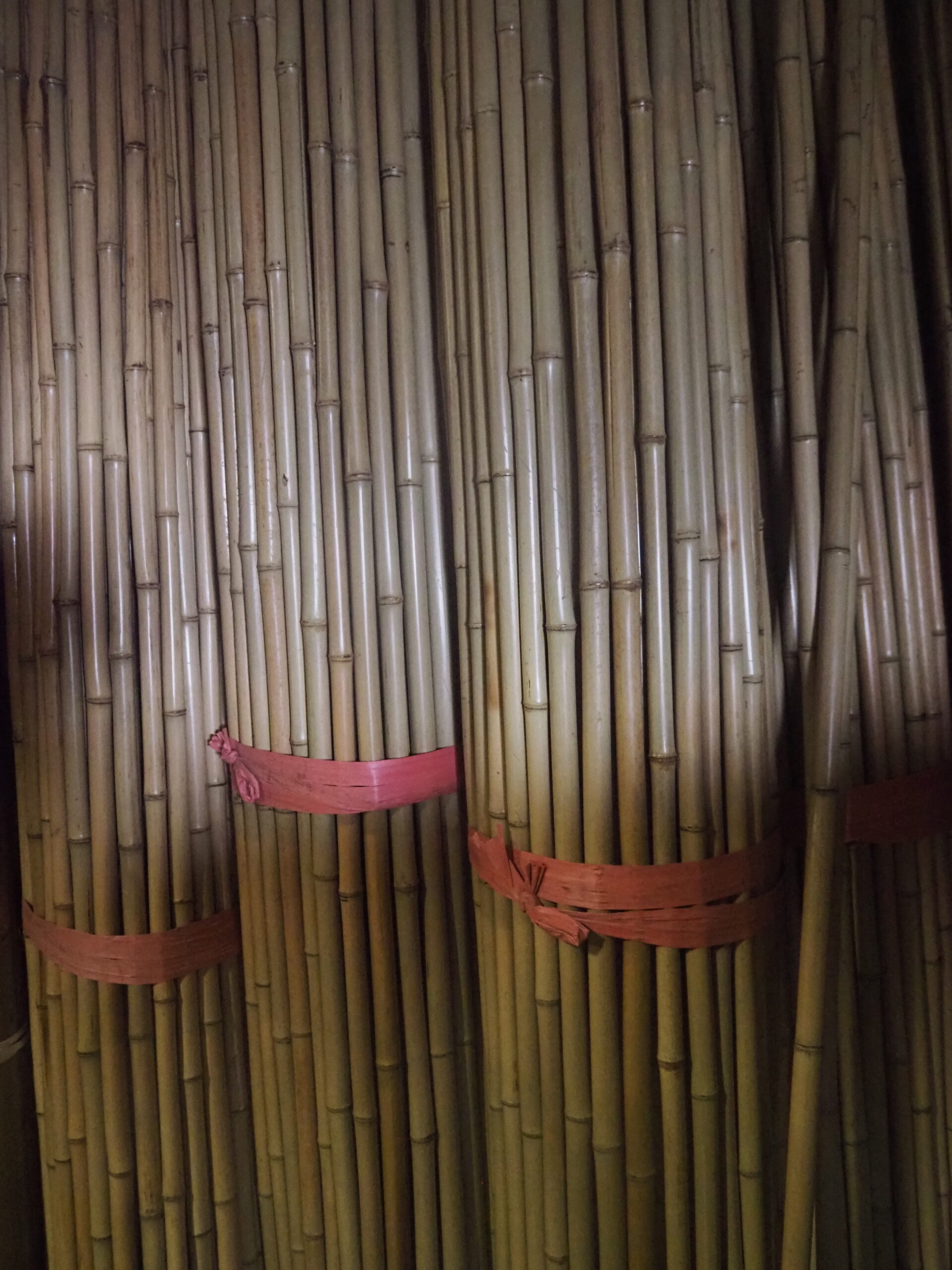
竹木舞用の竹も国産で長期保管してある材を使うため輸入できない、材が高いということがない材料でありこの竹に土でできた土壁は数百年持つ
普請道楽の典型例である竹木舞の土壁は究極のレジリエンス材
日本の建築美とも言える竹木舞の土壁。
竹を緻密に編み込み、幾層もの土を塗り重ねて完成するこの壁は、かつては茶室などの格式高い空間に許された特別な設えでした。
特に、聚楽第(じゅらくだい)跡から産出される「聚楽土(じゅらくつち)」を用いた土壁は、品格を象徴する意匠として、古くから重用されてきました。
日本独自の美意識である「侘び寂び」は、装飾を削ぎ落とした簡素さの中に、厳選された素材の優しい質感を宿します。
千利休が設計した二帖の茶室「待庵(たいあん)」が表現するように、装飾を排した極小の空間に、無限の奥行きが広がっています。
この、極めて洗練された空間構成は、フランスのル・コルビュジエらが近代建築(モダニズム)を提唱する数世紀も前から、日本で既に完成の域に達していました。
茶室という小宇宙で育まれた「侘び寂び」の美学は、「簡素」の中に「豊かさ」を宿すという意味で共通し、世界で最も早い「モダニズム」であったとも言われています。
竹木舞の土壁は現代の住宅性能と共存する
竹木舞の土壁は、単なる伝統美の継承に留まりません。その建築は、長期優良住宅など現代の住宅性能の高い住宅においても共存します。
私たちは、土壁特有の優れた調湿機能と質感を住宅性能を落とさず活かすため、外壁に用いず、室内の間仕切り壁として土壁を採用いたしました。
これにより、
「数寄屋(茶室)建築風和室」という意匠性に優れた様式での部屋設計
「断熱等級6(UA値 0.42)という現代の最高水準の断熱性能」を確保
「国産材100%の土壁による調湿性に優れ、季節の変化に順応した健康的な空気環境」の創出
という、伝統的で意匠性が高く自然由来のナチュラルな手法と現代住宅に求められる性能が共存する住空間を実現したのです。
それでいてこの壁だけでも歴史が証明するように数百年持ち、修繕の際の材も国内で容易に調達できるのです。
可能な限り修繕費などもかからない家に
レリーフとしましては、現代基準の性能を確保しながらこのような建築も可能という可能性を提案し、マンションにおける管理費・修繕積立金・駐車場代といったランニングコスト(維持費)を極限までゼロに近づけるライフスタイルを提案します。
当初より長期耐久かついつでも手に入れやすい材を使うことで住まう人の将来的な負担も減らし、長く豊かに住み継げ、永続的な資産となる家づくりを目指しています。
The take‑komai earthen wall technique is far more than a continuation of traditional aesthetics. Its construction method can coexist seamlessly with modern high‑performance housing standards, including long‑life quality housing certifications.
To preserve the exceptional humidity‑regulating properties and tactile richness unique to earthen walls—without compromising contemporary performance—we chose not to use them on exterior walls. Instead, we incorporated them as interior partition walls.
This approach enabled us to achieve:
- A sukiya-style Japanese room inspired by traditional tea‑house architecture, offering refined aesthetic value
- Modern top‑tier insulation performance, meeting Insulation Grade 6 (UA value 0.42)
- A healthy indoor environment that adapts naturally to seasonal changes, thanks to 100% domestically sourced earthen materials with excellent moisture‑control capabilities
In doing so, we created a living space where traditional, highly crafted, and naturally derived techniques coexist with the performance standards demanded of contemporary homes. Moreover, these walls alone can last for centuries—as history has proven—and the materials needed for future repairs can be easily sourced within Japan.
We aim to create homes that require as little maintenance cost as possible over their entire lifespan.
As part of our design philosophy, we propose the possibility of achieving traditional craftsmanship and natural materials while fully meeting modern performance standards. At the same time, we present a lifestyle in which ongoing expenses—such as condominium management fees, repair reserve funds, and parking fees—can be reduced to near zero through thoughtful planning from the construction stage.
By using long‑lasting, highly resilient materials from the outset, we significantly reduce the future financial burden on residents. Our goal is to build homes that can be lived in comfortably for generations, enriching daily life while also serving as a long‑term, sustainable asset.
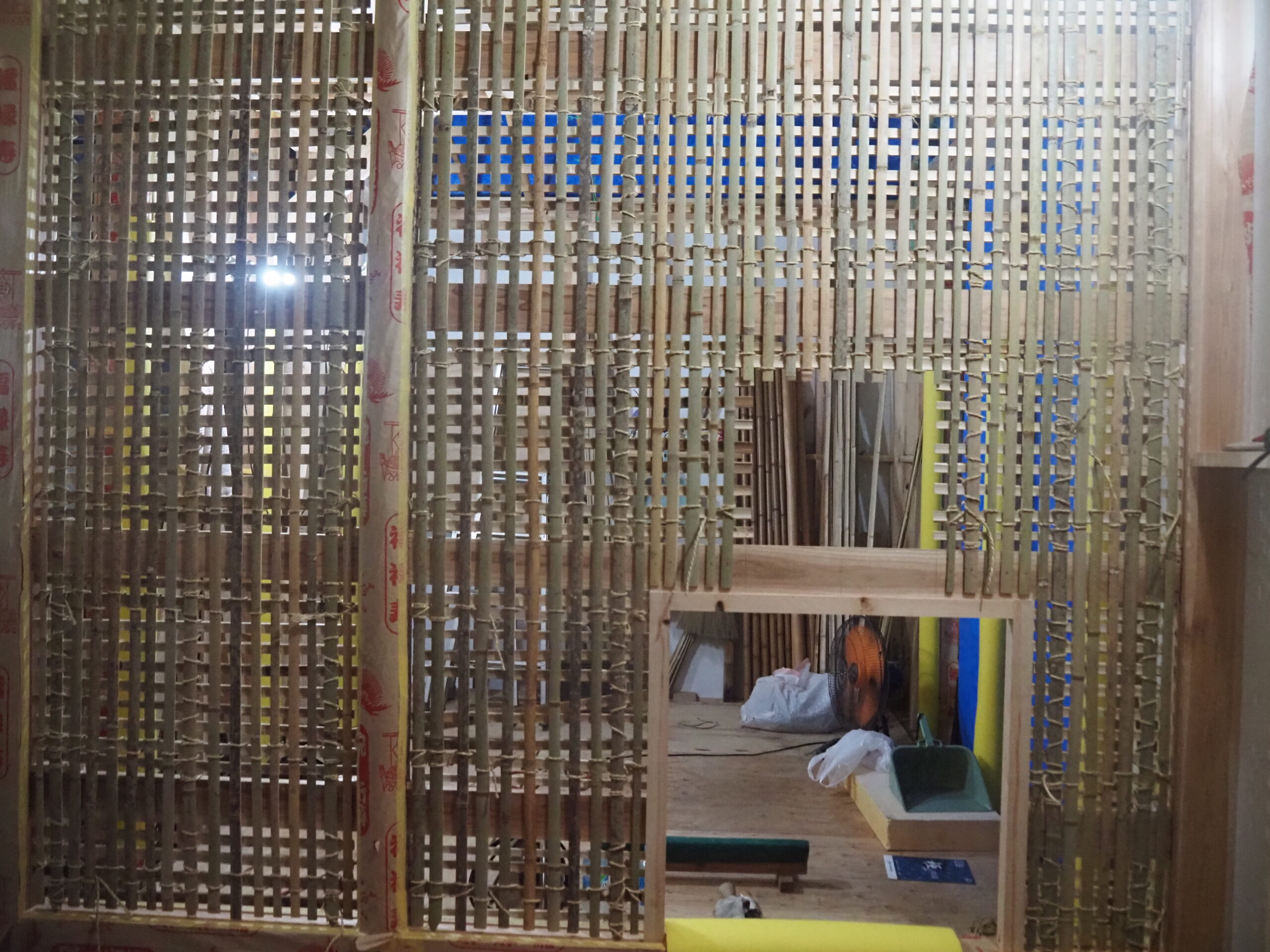
竹木舞の全景。躙口や下地窓用の開口部があり、銘木の錆び丸太など耐久性と同時に意匠性に富んでいます
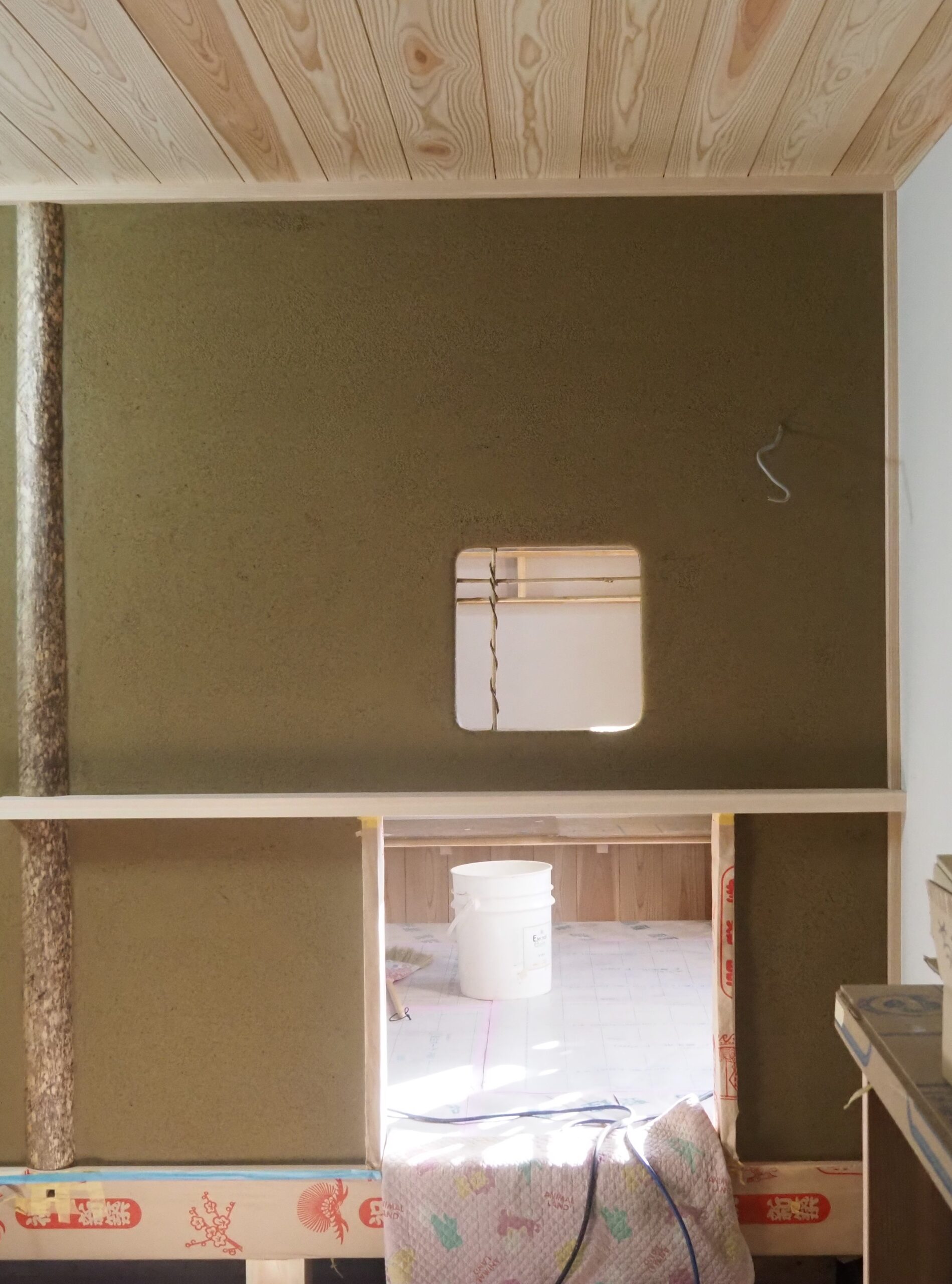
荒壁左官後の竹木舞土壁。この後漆喰の五度塗りを施しました
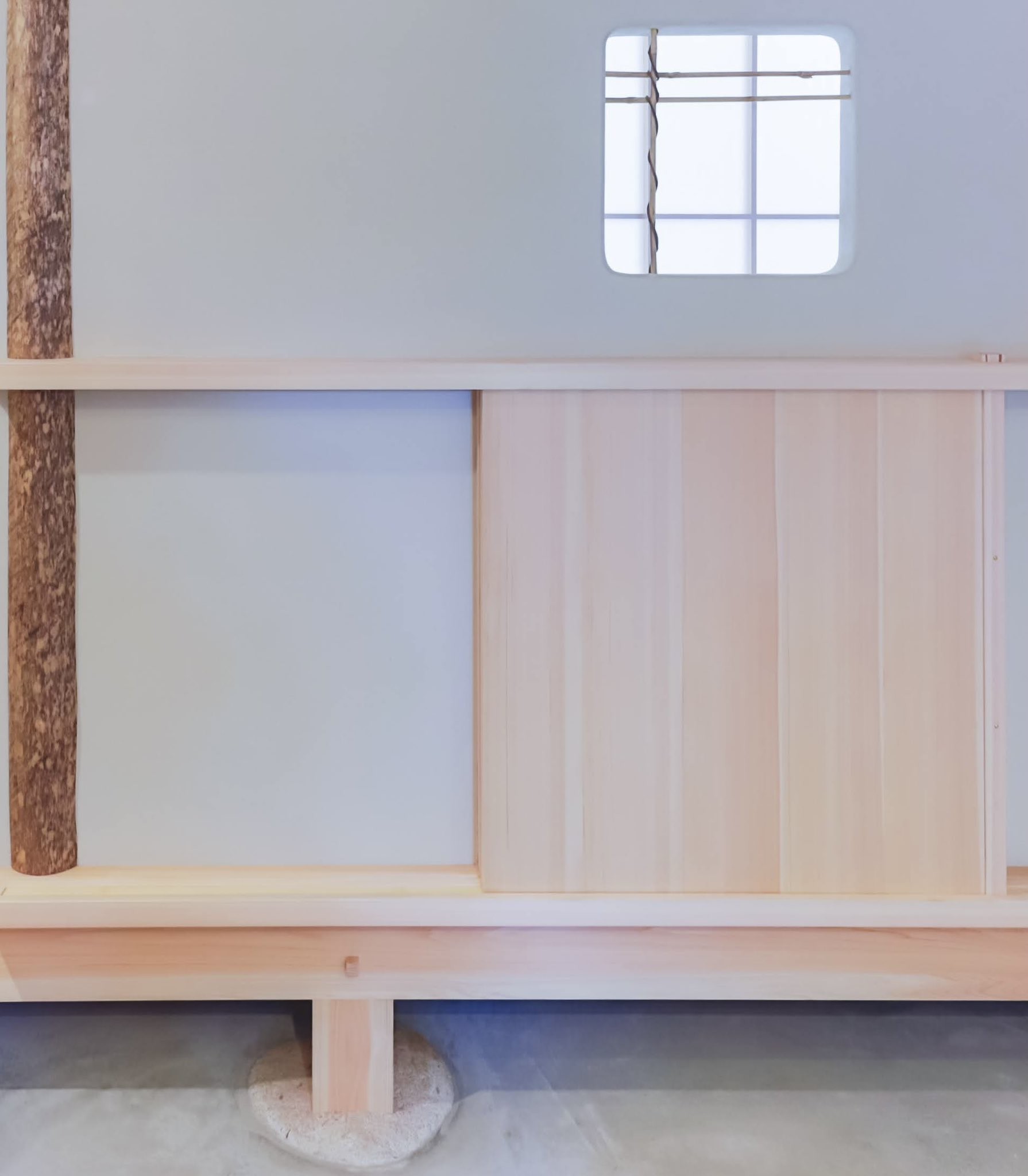
完成後の竹木舞土壁、躙り口、室内に設えた石場建て、下地窓、錆び丸太
※当建築では、日本の伝統構法と長期優良住宅などの現代規格を組み合わせた建築手法を多くの方に知っていただきたく、施主の許可がある場合に限り、国籍を問わず個人・法人の皆さまの見学や取材を受け付けております。
プライバシー保護のため、レリーフによる事前審査や、指定の本人(法人)確認書類のご提出、情報の二次利用や SNS への投稿を控えていただく旨を含む同意書へのご署名をお願いしております。また、審査の結果、見学・取材をお断りする場合がございますが、その際の審査内容や理由についてはお伝えできませんので、あらかじめご了承ください。
詳しい内容につきましては、お問い合わせフォームや質問用 LINE から、どうぞお気軽にご連絡ください。
(We welcome visits and interviews from individuals and organizations of any nationality, provided that the homeowner grants permission. Our aim is to share the construction approach that combines traditional Japanese building techniques with modern standards such as the Long‑Life Quality Housing certification.
For privacy protection, we ask that you complete a preliminary screening conducted by Releaf, submit the required personal (or corporate) identification documents, and sign a consent form that includes agreeing to refrain from secondary use of information and posting on social media. Please note that, depending on the results of the screening, we may decline requests for tours or interviews. In such cases, we are unable to disclose the details or reasons for the decision.
For more information, feel free to contact us through the inquiry form or our dedicated LINE account for questions.)
※ご質問やお問い合わせはホームページ上部の「無料相談予約」のLINEから「まったく新しい令和の家づくり帳の問い合わせ」と記載してご連絡いただくかメールフォームからお願いいたします。なお、内容によりご返答できない場合がございます旨ご了承ください。
(For questions or inquiries, please contact us via LINE from the “Free Consultation Reservation” link at the top of our website, and include the message “Inquiry about the Completely New Reiwa Homebuilding Guide.” Alternatively, you may use the contact form. Please note that we may not be able to respond depending on the nature of your inquiry.)
※当建築の提携工務店は工務店一覧に未記載の工務店です
(Please note that the construction company partnered with this building project is not listed in the official directory of contractors.)
※レリーフで記載の写真や文章はプライバシーにかかわる部分の削除など以外、すべてAIなどの自動生成技術を用いておりません。だだし、英訳は翻訳サイトにて翻訳しております
(The photos and texts shown in the our homepage were not created using AI or any other automatic generation technologies; however, the English translation was done using an online translation service.)
※当サイトのコンテンツについては、可能な限り正確な情報を掲載するよう努めておりますが、情報の正確性や安全性を保証するものではありません。 掲載内容によって生じた損害や損失等について、当サイトは一切の責任を負いかねますので、あらかじめご了承ください。 また、当サイトからリンクやバナーなどによって他のサイトに移動された場合、移動先サイトで提供される情報、サービス等について一切の責任を負いません。
(While we strive to provide the most accurate information possible, we do not guarantee the accuracy or safety of the content on this website.Please be advised that we shall not be held liable for any damages or losses incurred as a result of the information provided on this site.Furthermore, if you navigate to other websites via links or banners from this site, we take no responsibility for the information, services, or any other content provided on those external sites.)
こんな記事も読まれています
 2018年4月7日 カンタン!家族で楽しんでできる!すみたい家のイメージづくり完全ガイド【レリーフの家づくりのヒント講座①】
 2016年6月1日 ウェブ制作会社「ハイファイブクリエイト」に弊社ホームページが制作実例として紹介されました
 2016年6月28日 【ちょっとひといき】ReLeaf Coffeeを淹れるまで Vol.4
 2018年3月3日 事務所移転のおしらせ
 2016年3月6日 弊社提携工務店での部分工事やリフォーム・建売の依頼について

- お知らせ (49)
- 建築家 (20)
- 早川建築計画 (4)
- STUDIO8 (4)
- やしろ設計室 (4)
- MORIYA AND PARTNERS (2)
- トートアーキテクツLAB (2)
- shinya masuda design (1)
- 工務店 (74)
- 資金計画 (46)
- 1から始める資金計画 完全版 (6)
- ちょっとひといき (18)
- ただいま建築中・完成見学会 (61)
- きせきの家 (8)
- 川和町 建売プロジェクト (7)
- 葉山 ワインバルプロジェクト (2)
- 横浜の小さな2階建ての家 (3)
- “超”高性能でくつろぎ遊べる家 (8)
- 正反合 (5)
- 新築・リフォームのすすめ方 (90)
- 長期優良住宅 (3)
- ZEH (22)
- 家づくりのパートナー選び講座 (3)
- 0からはじめる家づくり (29)
- 設計見積り診断 (9)
- 家づくりのヒント講座 (5)
- 地震に対する取り組み (9)
- レリーフの相談会・企画 (51)
- すてきな平屋の家プロジェクト (8)
- 非住宅木造建築 (1)
- 木造建築ページのご案内 (1)
