


ただいま建築中・完成見学会
- ただいま建築中・完成見学会
【価値を一新する、まったく新しい令和の家づくり帳】「伝統構法×先端(正反合)」がはじまります
レリーフでは今回、計画段階の2023年~入居後の2025年にかけて実際に建築した住宅を当ブログでご紹介させていただく運びとなりました。
なお、この住宅はレリーフでの審査を通過した場合に、いつでも見学が可能です。詳しくはページ下部見学方法をご確認下さい。
At Releaf, we are pleased to share on this blog the home we designed and built, covering the period from the planning stage in 2023 through post‑move‑in in 2025.
This home is available for viewing at any time once it passes Relief’s screening process. For details, please refer to the viewing information at the bottom of this page.
住まうよろこびと住宅の資産価値を少なくとも100年維持することを目指した家づくり
この住宅は当初より、宮大工さんによる日本の伝統建築である「伝統構法」で構造や躯体を建築し、その上で、「先端」の長期優良住宅認定の断熱性能(等級6)や許容応力度計算で耐震等級3の基準、きめ細かい設計やモダンなデザイン、地産地消でサスティナブルに調和した焼杉の外壁などシンプルな住宅設備を採り入れることで、少なくとも100年、願わくば200年持つ構造・躯体がある上に先端を取り入れた快適な住まい方ができる住宅を目指しました。
その「伝統構法」と「先端」が融合する様を見て、施主がこの住宅に名付けたのが、子供の頃家族で旅をしたドイツの哲学にインスピレーションを得た「(正反合)」です。
施主にとっての宮大工による職人技やデザイン性、設備のこだわりでの心の満足度(情緒価値といいます)と、住宅そのものの客観的な評価基準である資産価値の両方を最大化し、住まうよろこびを最大化しつつ、現在の30年程度で住宅の資産価値が無くなるといういわば「常識」を変え、資産価値も100年持つことを建築当初より目指しました。
また、資金計画や土地探しから始めていますので、この資産価値が持続する住宅に合った今までと全く異なるアプローチでの資金計画や土地探しとなり、そのことで家づくりそのもの以外にも資金計画や土地探しにおいても今までにない革新的なものとなりました。
まったく新しい家づくり・資金計画・土地探しに一体として取り組みました具体的な過程を今後このブログで当初からの建築行程とともに提案いたします。
This home was conceived from the very beginning as a project built using traditional Japanese construction methods—dentō kōhō, crafted by master temple carpenters (miyadaiku). On top of this traditional structural framework, we incorporated advanced features such as Grade 6 insulation performance certified under the Long-term Quality Housing program, seismic grade 3 based on allowable stress calculations, meticulous architectural detailing, modern design elements, and simple yet sustainable materials such as locally sourced charred cedar siding. Our aim was to create a home with a structure capable of lasting at least 100 years—ideally 200—while offering a modern, comfortable lifestyle supported by cutting-edge performance.
Inspired by the fusion of “tradition” and “innovation,” the homeowner named the house “Thesis–Antithesis–Synthesis,” drawing from German philosophy that had left a strong impression during family travels in childhood.
For the homeowner, the craftsmanship of the miyadaiku, the design, and the carefully selected features provide deep emotional satisfaction—what we call emotional value. At the same time, we sought to maximize the asset value of the home, which is an objective measure of its quality. By enhancing both emotional and asset value, we aimed to transform the conventional notion that a home’s value disappears after about 30 years, and instead create a residence whose value endures for a century.
Because the project began with financial planning and land selection, both processes required a completely new approach suited to a long-lasting, high‑value home. This resulted in innovative methods not only in the construction itself but also in the financial and land‑search stages.
In this blog, we will share the full process—from the earliest planning stages through construction—illustrating how we approached this entirely new way of building, financing, and selecting land as one integrated project.
そもそも日本の伝統構法の住宅は少なくとも100年持つ
日本の木造建築は世界最古の法隆寺をはじめとして築数百年後も利用できる木造建築や古民家で溢れています。
レリーフとしましては、数十年のスパンで居住性も資産価値も失ってしまう現代の家は、戦後の特殊な事情が生んだ産物だと考えています。物資不足の中で、薄い部材や安価な輸入プレカット材を使い、短期間で大量供給することを優先した結果、30〜50年で寿命を迎える「簡易的な家」が主流となってしまったのです。
しかし、本来の日本の木造建築の姿は全く異なります。
機械で画一的に加工・人工乾燥されたプレカット材とは異なり、静岡県天竜産の天然乾燥の杉と檜は樹齢と同じ歳月をかけて強度を増し、適切なメンテナンスを行えば、さらにそこから100年、200年と生き続けます。
静岡県天竜産の樹齢80年以上の天然乾燥の杉や檜を、宮大工さんが台かんなや鑿で手刻みし、渡り顎構法や追掛大栓継ぎ、四方鎌や鼻栓・込栓などで木組みで構築した構造・躯体で、なおかつ認定長期優良住宅かつ許容応力度計算で耐震等級3の住宅は本当に30年しか持たないでしょうか。
木造建築が数百年持っている現実から鑑みてももちろんそんなことは全くありません。
従来よりあった日本の誇るべき伝統構法で日本の木を使えば100年持つ住宅は当たり前に建ち、そこに現代の住宅性能である断熱性能など先端の機能を持たすことが可能なのです。
「30年で資産価値が消える」という考えは、ここ数十年の間に作られた一時的な慣習に過ぎません。日本の木造建築史の大きな視点に立てば、その常識は覆されるべき一時的な誤解なのです。
現代の新建材や住宅設備の寿命、あるいは住宅ローンの金利の行方を正確に予言できる人は誰もいません。しかし、「日本の伝統的な木造建築が数百年耐えうる」という事実は、歴史が幾度となく証明しています。
今、日本の建築が再び目を向けるべきなのは、この揺るぎない「本質」ではないでしょうか。
Japan’s wooden architecture is filled with structures that remain usable centuries after their construction, from the world‑renowned Hōryū‑ji—the oldest surviving wooden building—to countless traditional homes and kominka scattered across the country.
At Releaf, we consider homes that lose both livability and asset value within a few decades to be the result of post‑war material shortages, when houses were built with thinner structural members or with inexpensive, mass‑produced imported precut lumber to achieve short construction times. Such simplified post‑war homes typically become uninhabitable within 30 to 50 years, and their asset value disappears in roughly 30 years.
But think about it carefully.
Unlike precut lumber, natural timber gradually increases in strength as it grows, reaching peak durability around the age of the tree itself, and then slowly declining—yet with proper maintenance, it can last for another full lifespan. This home uses naturally dried cedar and cypress from Tenryū in Shizuoka, each over 80 years old. These materials were hand‑crafted by miyadaiku using traditional tools such as planes and chisels, and assembled with joinery techniques like watari‑ago, ookake‑daisen‑tsugi, shihō‑gama, and wooden pegs and locking pins. Combined with certification as a Long‑term Quality Housing unit and seismic grade 3 based on allowable stress calculations, can such a structure truly last only 30 years?
Of course not. The reality of wooden buildings surviving for centuries makes that clear.
When Japanese timber is used with Japan’s proud traditional construction methods, building a home that lasts 100 years is entirely normal. And on top of that, modern performance—such as advanced insulation—can be integrated seamlessly.
The idea that a home’s asset value disappears after 30 years is merely a convention of the past few decades. From a broader historical perspective, it is a misconception that can and should be overturned.
No one can predict the future of modern building materials, equipment, or mortgage interest rates. But the fact that traditional Japanese wooden architecture endures for centuries has been proven countless times throughout history. This is where Japanese architecture should refocus its attention.
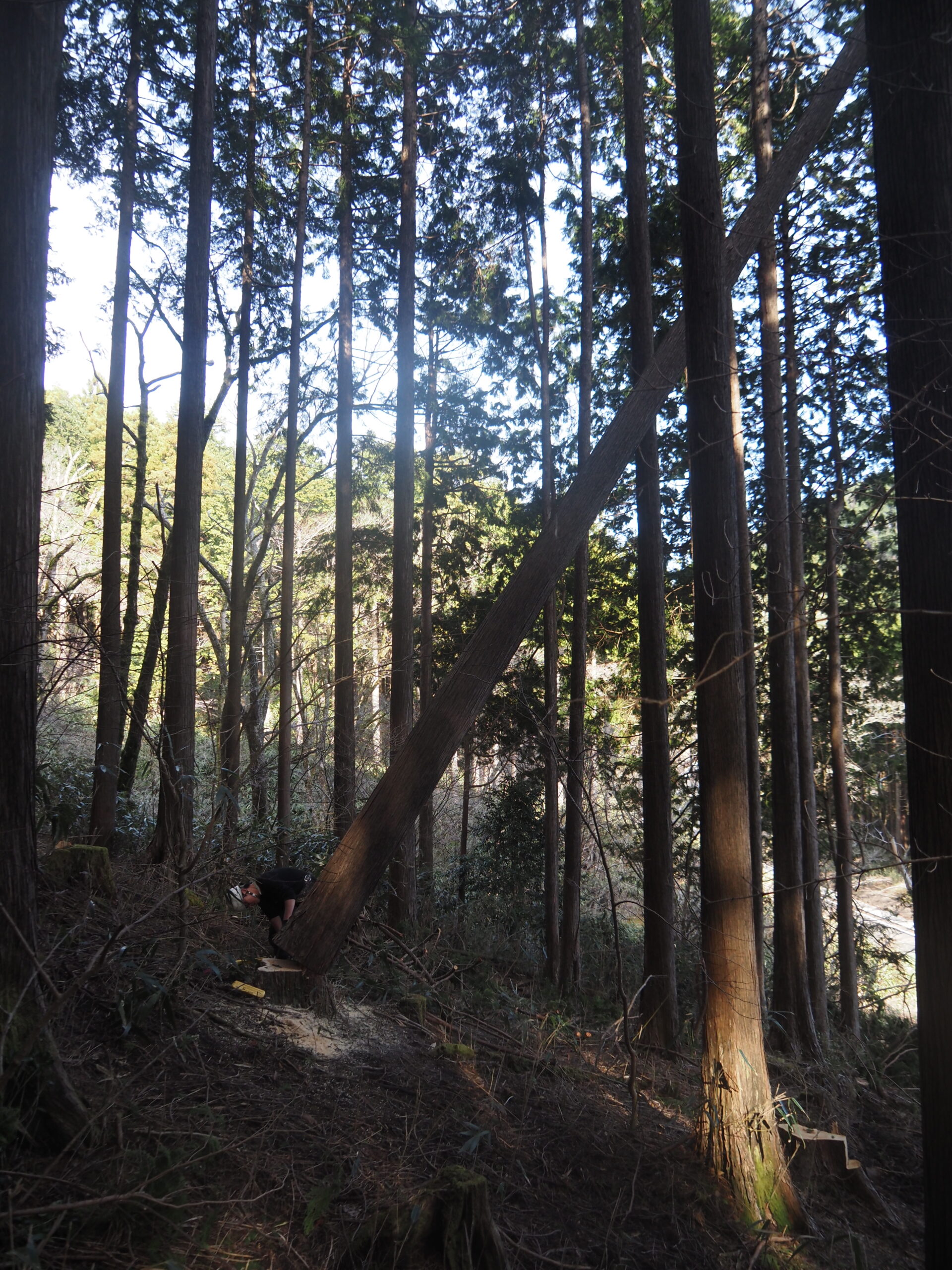
文字通りの大黒柱の選定から家づくりがはじまります。伐採時期や乾燥期間が検討され、箱根の樹齢130年の檜が今回の住宅の大黒柱となりました。木は切られてから第二の木の一生を歩みます。大黒柱だけでも200年は持つ住宅のはじまりの瞬間です。
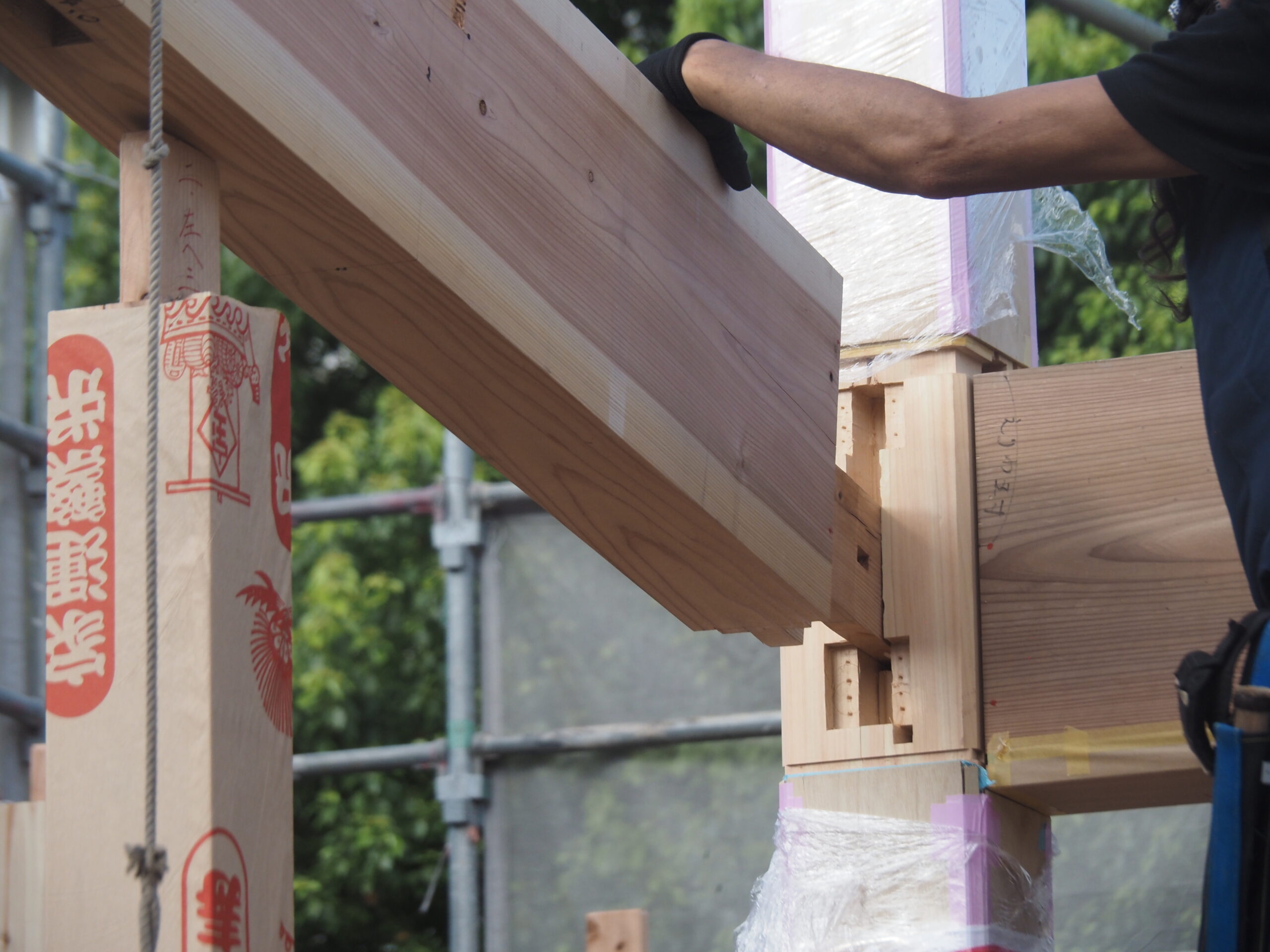 檜の大黒柱に輸入材では見られない巨大な天竜杉一本物の梁が長ホゾと金輪栓などで四方差しで組まれる瞬間。複雑な仕口が宮大工の高度な技術を物語ります。金物が一つも見られないのも大きな特徴です。
住宅を恒久的な資産とした場合の資金計画は発想が逆転する
これまで数十年の間、日本の住宅ローンにおける「常識」は、「できるだけ借入を抑え、低金利の変動金利を選ぶこと」でした。しかし、この常識は二つの危うい前提の上に成り立っています。
1.「家は30年で価値がなくなる」という思い込み
2.「金利はこれからも下がり続ける」というデフレの錯覚
しかし、レリーフは、この「常識」はもはや通用しない、あるいは少なくともこれからの時代にはそぐわないと考えています。
レリーフではご案内の通り住宅の資産価値は100年持つと考えていますし、長期の35年や50年ローンでの変動金利は金利上昇リスクが大いにありますので、10年以上前からこのブログで低金利のうちにフラット35で金利を固定することを推奨しています。こうすれば、住宅のインフレ時の資産性を確保しつつ固定金利の安心も買えるのです。
このように、そもそも「常識」とされている「無価値になる住宅にはお金をかけない」「永遠に低金利」の前提がおかしい。あるいは今後は変わる。
レリーフは10年前も今も確信しています。
また、これまで通り建築行程のストーリーでの紹介もいままでのようにございます。
以前にご紹介しました、「きせきの家」では注文住宅はお金持ちだけのものではなく家づくりに情熱をお持ちのすべての方が実現できることをお示しし、「“超”高性能でくつろぎ遊べる家」では住宅の気密や断熱性能を2020年の時点でご案内しており、業界で先駆けてご案内したと思っております。
今回も、これらと同様に着工から時系列での建築行程のご案内になります。
このご案内においては「伝統構法×先端(正反合)」の住宅を知るにつれ、住宅の本来の価値は施主の情緒価値の最大化やすまう方の幸せにあることも再確認できると思います。
そして最後に、再度になりますが、この住宅は本質的な価値のある伝統構法を先端の規格やデザインとともに建築することで100年にわたるすまうよろこびと資産価値の維持、最大化を実現する試みです。
そのことで家づくりのみならず資金計画や土地探しの面でも前述のような新たな価値観の元で実施されました。
これからご紹介するそれらの内容のひとつひとつがこれから家づくりをされるすべての方の羅針盤となるのであれば、大きなよろこびです。
また、気になる方はまず見学をお気軽に申し込んでみてください。
それでは、【価値観を一新する、まったく新しい令和の家づくり帳】「伝統構法×先端(正反合)」を旅していきましょう。
For several decades, the “common sense” of home loans in Japan has been to borrow as little as possible and choose a low‑interest variable‑rate mortgage. However, this belief rests on two fragile assumptions:
- the assumption that a home loses its value in 30 years, and
- the deflation‑era illusion that interest rates will continue to fall.
Relief believes that this “common sense” no longer holds true—or at the very least, is not suited to the era ahead.
As we have explained, we consider a home’s asset value to last 100 years. And with long‑term loans of 35 or even 50 years, variable‑rate mortgages carry significant interest‑rate risk. For more than ten years, we have recommended on this blog that homeowners lock in low interest rates through Flat 35, a long‑term fixed‑rate mortgage. This approach preserves the home’s asset value during inflation while also providing the security of a fixed rate.
In other words, the long‑held assumptions— “Don’t invest in a home that will become worthless” and “Low interest rates will last forever” are fundamentally flawed, or at least destined to change. Relief believed this ten years ago, and we believe it today.
As always, we will also introduce the construction process in detail.
In “The Miracle House,” we demonstrated that custom homes are not only for the wealthy but achievable for anyone with passion for homebuilding. In “A Super‑High‑Performance Home for Relaxation and Play,” we introduced airtightness and insulation performance as early as 2020—well ahead of the industry.
This project will likewise be presented in chronological order.
As you follow the construction process of this “Traditional Construction × Innovation (Thesis–Antithesis–Synthesis)” home, we believe you will rediscover that the true value of a house lies in maximizing emotional satisfaction and the happiness of the people who live in it.
Once again, this home is an attempt to combine Japan’s traditional construction methods with modern standards and design, creating long‑lasting joy in living and maximizing asset value for the homeowner. From the very beginning, we aimed to generate added value not only in the home itself but also in financial planning and land selection, guided by a new set of values.
If these ideas can serve as a compass for anyone beginning their homebuilding journey, it would bring us great joy.
If you are interested, please feel free to request a viewing.
Now, let us begin our journey through
“A Completely New Approach to Homebuilding in the Reiwa Era: Traditional Construction × Innovation (Thesis–Antithesis–Synthesis).”
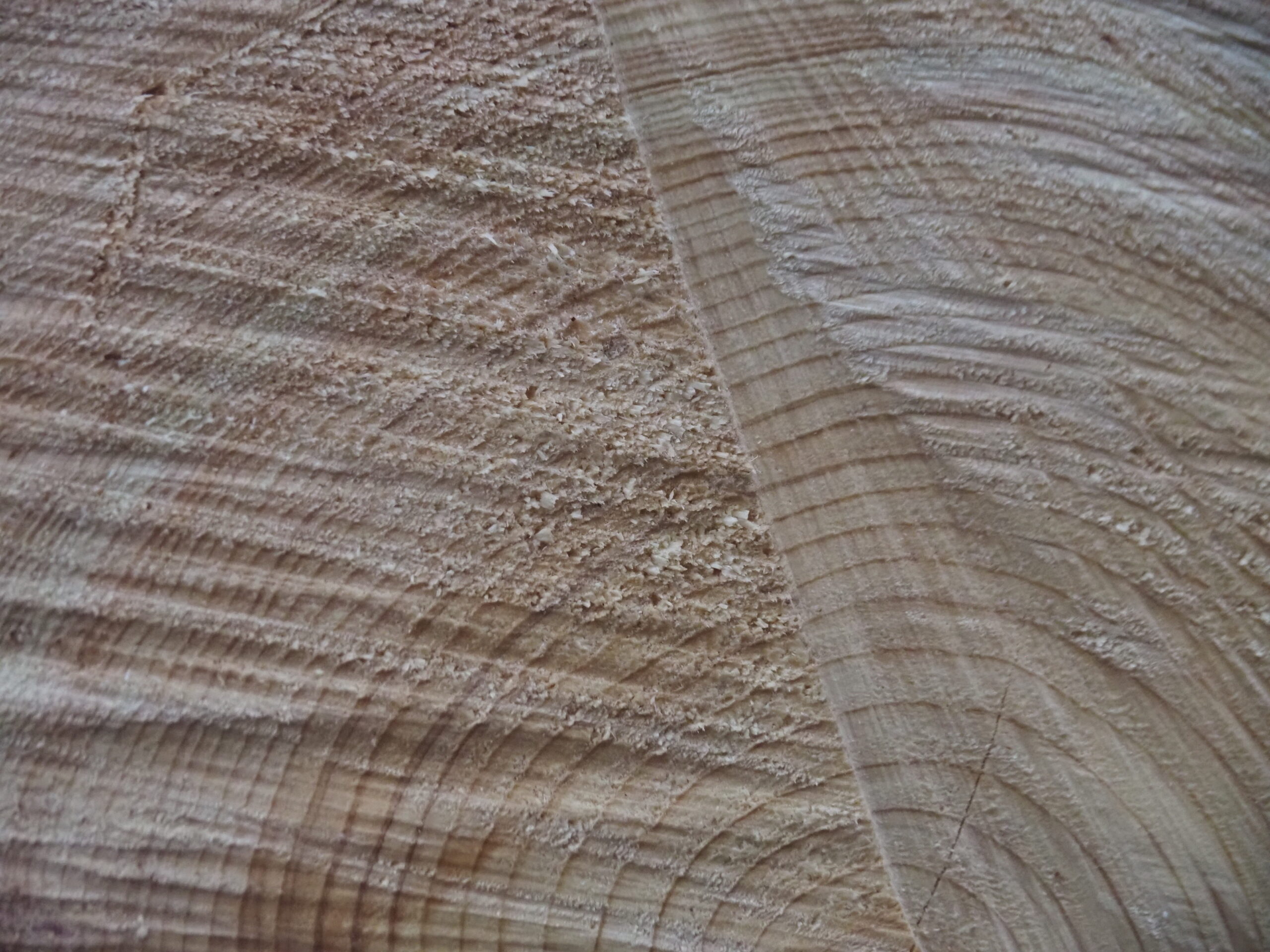 樹齢130年の来歴の檜の年輪。木にも背と腹がある。林業家はその年輪の幅やクセなどでその年がどのような気候の年で、どのような生育をし、どのような性格をもっているか見抜く。それを大工と共有し家のどの部分に使うかを吟味する。
※当建築では、日本の伝統構法と長期優良住宅などの現代規格を組み合わせた建築手法を多くの方に知っていただきたく、施主の許可がある場合に限り、国籍を問わず個人・法人の皆さまの見学や取材を受け付けております。
プライバシー保護のため、レリーフによる事前審査や、指定の本人(法人)確認書類のご提出、情報の二次利用や SNS への投稿を控えていただく旨を含む同意書へのご署名をお願いしております。また、審査の結果、見学・取材をお断りする場合がございますが、その際の審査内容や理由についてはお伝えできませんので、あらかじめご了承ください。
詳しい内容につきましては、お問い合わせフォームや質問用 LINE から、どうぞお気軽にご連絡ください
(We welcome visits and interviews from individuals and organizations of any nationality, provided that the homeowner grants permission. Our aim is to share the construction approach that combines traditional Japanese building techniques with modern standards such as the Long‑Life Quality Housing certification.
For privacy protection, we ask that you complete a preliminary screening conducted by Releaf, submit the required personal (or corporate) identification documents, and sign a consent form that includes agreeing to refrain from secondary use of information and posting on social media. Please note that, depending on the results of the screening, we may decline requests for tours or interviews. In such cases, we are unable to disclose the details or reasons for the decision.
For more information, feel free to contact us through the inquiry form or our dedicated LINE account for questions.)
※ご質問やお問い合わせはホームページ上部の「無料相談予約」のLINEから「まったく新しい令和の家づくり帳の問い合わせ」と記載してご連絡いただくかメールフォームからお願いいたします。なお、内容によりご返答できない場合がございます旨ご了承ください
(For questions or inquiries, please contact us via LINE from the “Free Consultation Reservation” link at the top of our website, and include the message “Inquiry about the Completely New Reiwa Homebuilding Guide.” Alternatively, you may use the contact form. Please note that we may not be able to respond depending on the nature of your inquiry.)
※宮大工とは、寺社仏閣建築を手掛けたことがある大工さんのこと。以下このシリーズですべて同様です
(A miyadaiku is a carpenter who has experience working on the construction of temples and shrines. The same applies to all terms in this series.)
※当建築の提携工務店は工務店一覧に未記載の工務店です
(Please note that the construction company partnered with this building project is not listed in the official directory of contractors.)
※レリーフで記載の写真や文章はプライバシーにかかわる部分の削除など以外、すべてAIなどの自動生成技術を用いておりません。だだし、英訳は翻訳サイトにて翻訳しております
(The photos and texts shown in the our homepage were not created using AI or any other automatic generation technologies; however, the English translation was done using an online translation service.)
※当サイトのコンテンツについては、可能な限り正確な情報を掲載するよう努めておりますが、情報の正確性や安全性を保証するものではありません。 掲載内容によって生じた損害や損失等について、当サイトは一切の責任を負いかねますので、あらかじめご了承ください。 また、当サイトからリンクやバナーなどによって他のサイトに移動された場合、移動先サイトで提供される情報、サービス等について一切の責任を負いません。
(While we strive to provide the most accurate information possible, we do not guarantee the accuracy or safety of the content on this website.Please be advised that we shall not be held liable for any damages or losses incurred as a result of the information provided on this site.Furthermore, if you navigate to other websites via links or banners from this site, we take no responsibility for the information, services, or any other content provided on those external sites.)
こんな記事も読まれています
 2016年2月6日 フラット35 2月の金利のお知らせ
 2017年3月8日 【写真など更新】コージーホームさんの完成見学会に行ってきました PART2
 2017年7月28日 【神奈川県横浜市】近日着工予定!!【富士山を望む長期優良住宅】
 2016年2月3日 資金計画のためのお役立ちサイトのご紹介
 2017年9月28日 【神奈川県横浜市神奈川区】【家づくりのご紹介】「きせきの家」ができるまで① 晴れて建築スタート!!

- お知らせ (49)
- 建築家 (20)
- 早川建築計画 (4)
- STUDIO8 (4)
- やしろ設計室 (4)
- MORIYA AND PARTNERS (2)
- トートアーキテクツLAB (2)
- shinya masuda design (1)
- 工務店 (74)
- 資金計画 (46)
- 1から始める資金計画 完全版 (6)
- ちょっとひといき (18)
- ただいま建築中・完成見学会 (61)
- きせきの家 (8)
- 川和町 建売プロジェクト (7)
- 葉山 ワインバルプロジェクト (2)
- 横浜の小さな2階建ての家 (3)
- “超”高性能でくつろぎ遊べる家 (8)
- 正反合 (5)
- 新築・リフォームのすすめ方 (90)
- 長期優良住宅 (3)
- ZEH (22)
- 家づくりのパートナー選び講座 (3)
- 0からはじめる家づくり (29)
- 設計見積り診断 (9)
- 家づくりのヒント講座 (5)
- 地震に対する取り組み (9)
- レリーフの相談会・企画 (51)
- すてきな平屋の家プロジェクト (8)
- 非住宅木造建築 (1)
- 木造建築ページのご案内 (1)
